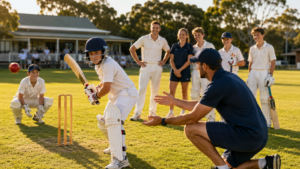
Junior cricket gives children a structured way to stay active, learn sport skills, make friends, and build confidence through regular training and match play. For many young players, cricket becomes more than a weekend activity. It teaches patience, focus, discipline, communication, and respect for teammates, coaches, umpires, and opponents.
A good junior cricket program helps children improve step by step. Some children start with basic batting and bowling. Others already know the game and want to sharpen their match skills. Both groups benefit from coaching, repetition, encouragement, and the shared experience of being part of a team.
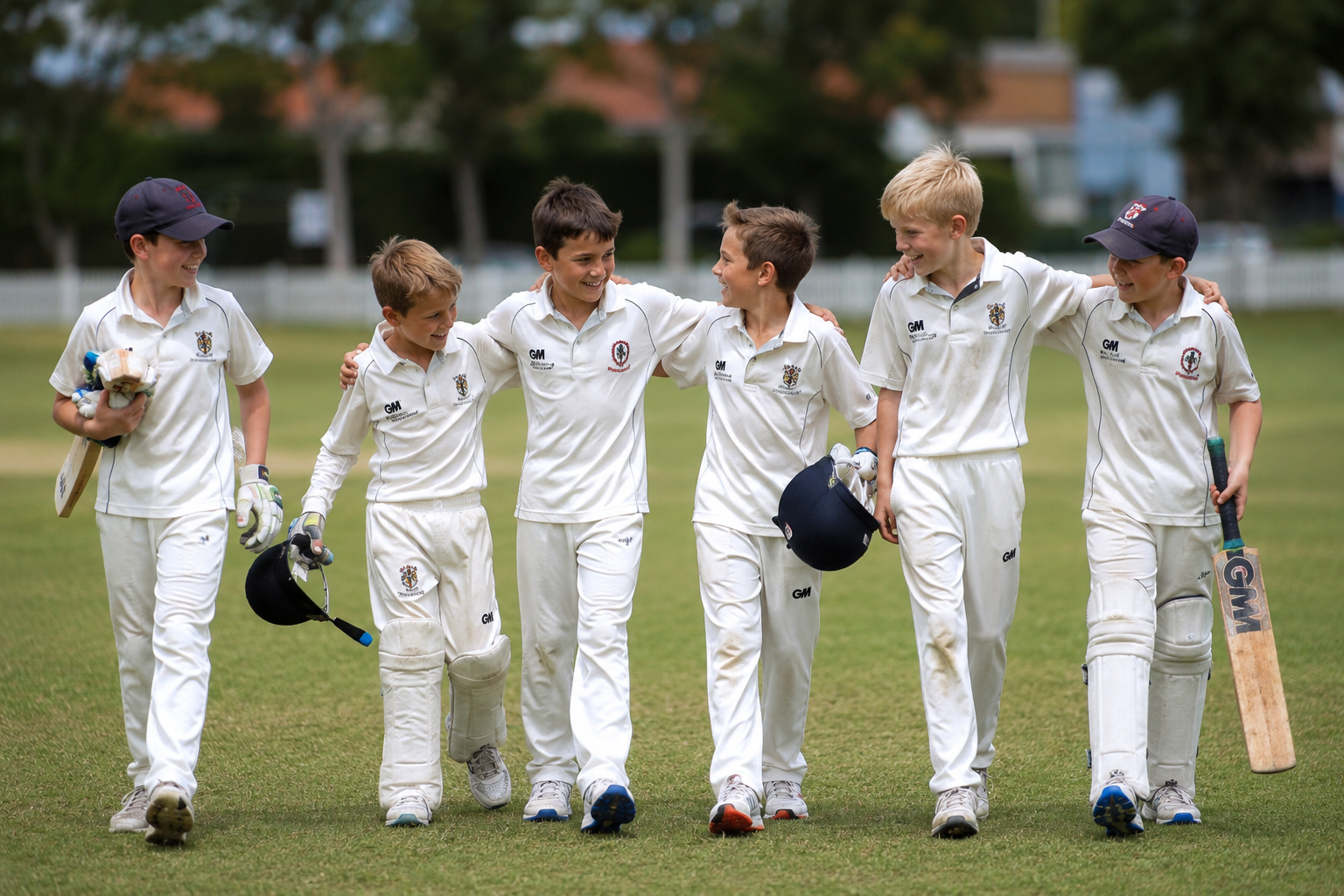
Key Takeaways
- Junior cricket builds confidence by helping children practise skills, make decisions, and see their own progress.
- Junior cricket teaches teamwork because every player has a role in batting, bowling, fielding, backing up, and supporting teammates.
- Junior cricket develops match skills through real game situations, not just training drills.
- Cricket helps children build patience and focus because the game rewards concentration over quick reactions alone.
- Club cricket gives children a positive social setting where they can meet other young players and feel part of a local team.
Why is junior cricket good for children?
Junior cricket is good for children because it combines physical activity, skill development, teamwork, confidence building, and social connection.
Cricket is a game where children do not need to be the fastest runner or strongest athlete to enjoy success. A young player can contribute by taking a catch, stopping a boundary, bowling one good over, backing up a teammate, or staying calm while batting.
That makes cricket valuable for many children. The sport gives different personalities a way to grow. Confident children can learn patience. Quiet children can find their voice. Competitive children can learn sportsmanship. New players can improve at their own pace.
How does junior cricket build confidence?
Junior cricket builds confidence by giving children clear skills to practise and visible progress to feel proud of.
Confidence grows when children see improvement. A player who once missed the ball starts making contact. A bowler who struggled with control starts landing the ball on a good line. A fielder who felt nervous starts calling for catches.
These small wins matter. They show children that effort leads to progress.
Junior cricket helps confidence grow through the experiences listed below.
- Learning how to bat with better balance and timing.
- Bowling with more control and rhythm.
- Catching, throwing, and stopping the ball in the field.
- Speaking with coaches and teammates during training.
- Playing in front of parents, families, and supporters.
- Recovering after mistakes and trying again.
- Contributing to the team even without scoring many runs or taking wickets.
Confidence in cricket often transfers into school, friendships, and other sports because children learn how to handle pressure and keep improving.
How does junior cricket teach teamwork?
Junior cricket teaches teamwork because players learn that every role matters during a match.
Cricket may look like an individual sport when one player is batting or bowling, but the game depends on the whole team. Fielders support the bowler. Batting partners communicate between wickets. Wicketkeepers encourage fielders. Players on the sideline support the team.
A junior cricket team works best when children learn to trust each other.
Teamwork develops through the actions listed below.
- Calling clearly while running between wickets.
- Backing up throws in the field.
- Encouraging bowlers after a bad ball.
- Celebrating catches, wickets, and good fielding.
- Listening to team plans from coaches.
- Sharing batting, bowling, and fielding opportunities.
- Respecting umpires and opposition players.
Children learn that cricket is not only about personal scores. A player who saves ten runs in the field can help the team as much as a player who scores twenty runs with the bat.
How does junior cricket improve match skills?
Junior cricket improves match skills by placing children in real game situations where they must think, react, and make decisions.
Training drills are important, but matches teach children how cricket works under pressure. A batter must decide which balls to defend, attack, or leave. A bowler must adjust after a loose delivery. A fielder must stay alert even when the ball has not come to them for several overs.
Match skills develop through repeated experience.
Junior players improve the match skills listed below.
- Reading the ball from the bowler’s hand.
- Choosing safe and smart shots.
- Rotating strike with quick singles.
- Bowling to a field plan.
- Understanding line, length, pace, and variation.
- Staying focused during long fielding periods.
- Communicating with batting partners.
- Understanding when to attack and when to defend.
These skills take time. That is why regular junior cricket is so useful. Children get repeated chances to learn, test themselves, and adjust.
Why does cricket help children handle pressure?
Cricket helps children handle pressure because the game includes quiet moments, sudden chances, and personal responsibility.
A batter may walk out knowing the team needs runs. A bowler may need to defend a small total. A fielder may wait several overs before one important catch comes their way.
These moments help children learn emotional control. They learn how to breathe, reset, listen, and focus on the next ball.
Cricket also teaches children that mistakes are part of sport. A dropped catch, missed shot, wide ball, or run out does not define a player. The next effort still matters.
That lesson is one of the strongest benefits of junior cricket.
Why is cricket good for social development?
Cricket is good for social development because children spend time with teammates, coaches, parents, and volunteers in a positive club setting.
Junior players often form friendships through training, match days, team talks, warm ups, and shared experiences. Children learn how to talk to others, support teammates, ask questions, and listen to instructions.
For new families, cricket can also make joining a local community easier. Training nights and match days give parents and children a regular place to connect with others.
Social skills grow through the club experiences listed below.
- Meeting new teammates.
- Listening to coaches.
- Respecting team rules.
- Supporting younger or newer players.
- Taking turns during training.
- Learning how to win and lose respectfully.
- Being part of club events and presentation days.
A strong junior cricket club gives children a safe, friendly, and active setting where they can feel included.
What skills do children learn in junior cricket?
Children learn batting, bowling, fielding, catching, throwing, running, communication, concentration, and teamwork in junior cricket.
The sport teaches physical and mental skills at the same time. A child learns how to hold a bat, but also when to take a run. A child learns how to bowl, but also how to recover after a poor delivery. A child learns how to catch, but also how to stay ready when the ball may not come for several minutes.
Important junior cricket skills are listed below.
- Batting grip, stance, footwork, and shot selection.
- Bowling run up, release, line, length, and control.
- Fielding position, catching technique, throwing, and backing up.
- Running between wickets and calling clearly.
- Match awareness and game understanding.
- Team communication and respect.
- Patience, focus, and resilience.
These skills develop gradually with training and match exposure.
Is junior cricket suitable for beginners?
Yes, junior cricket is suitable for beginners because clubs usually teach the basics in a structured and supportive way.
Children do not need to know every rule before joining. Coaches can explain the format, equipment, training routine, safety basics, and match expectations.
Beginner players usually start with simple goals. They may learn how to hold the bat, bowl with a straight arm, catch safely, throw accurately, and understand basic field positions.
As confidence improves, children can move into more advanced skills such as shot placement, bowling variation, wicketkeeping, and match tactics.
What should parents expect from junior cricket?
Parents should expect training sessions, weekend matches, club communication, team involvement, and steady skill development across the season.
Junior cricket works best when parents support attendance, encouragement, preparation, and positive sideline behaviour. Children usually enjoy the sport more when adults focus on effort, learning, and enjoyment rather than only scores and results.
Parents may also be asked to help with small club roles such as scoring, team support, canteen duties, setting up equipment, or helping with communication.
This support helps junior cricket run smoothly and keeps the club strong.
How can children get the most from junior cricket?
Children can get the most from junior cricket by attending training regularly, listening to coaches, supporting teammates, and staying positive after mistakes.
Improvement usually comes from simple habits repeated over time. Turning up matters. Practising matters. Asking questions matters. Trying again after a mistake matters.
Young players should focus on the habits listed below.
- Arrive on time for training and matches.
- Bring the right cricket gear.
- Listen carefully to coaches.
- Practise batting, bowling, and fielding basics.
- Encourage teammates.
- Stay respectful toward umpires and opponents.
- Learn from mistakes without giving up.
A good attitude helps children enjoy the game and improve faster.
Why should your child join junior cricket this season?
Your child should join junior cricket this season because the sport builds confidence, teaches teamwork, develops match skills, and gives children a positive place to belong.
Junior cricket gives children a healthy outdoor activity with clear structure and regular social contact. It supports fitness, coordination, communication, confidence, and mental focus.
For families, cricket also creates a strong weekly routine. Training gives children time to learn. Match day gives them a chance to test their skills. Club life gives them a community around the sport.
Frequently Asked Questions
What age can children start junior cricket?
Children can usually start junior cricket from early primary school age, depending on the club and local competition format. The best option is to ask the club which age group suits your child.
Does my child need experience to play junior cricket?
No, your child does not need experience to play junior cricket. Most clubs welcome beginners and teach the basic skills during training.
Is junior cricket safe for children?
Yes, junior cricket is designed to be safe when children use the right equipment, follow coaching instructions, and play in the correct age group.
What equipment does a junior cricketer need?
A junior cricketer may need a bat, pads, gloves, helmet, protective gear, cricket shoes, and club uniform. Some clubs may provide shared training equipment for beginners.
How does junior cricket help confidence?
Junior cricket helps confidence by giving children achievable goals, regular practice, coach support, and real chances to contribute in matches.
How does cricket teach teamwork?
Cricket teaches teamwork by requiring players to communicate, support each other, field as a unit, bat in partnerships, and respect team plans.
Is junior cricket only for competitive children?
No, junior cricket is not only for competitive children. The sport suits beginners, social players, developing players, and children who simply want to be active with friends.
Can girls play junior cricket?
Yes, girls can play junior cricket. Many clubs offer mixed teams, girls teams, or suitable age group options depending on player numbers and local competitions.
How often do junior cricket teams train?
Junior cricket teams often train once a week and play matches on weekends, although schedules vary by club and age group.
What is the biggest benefit of junior cricket?
The biggest benefit of junior cricket is that children develop confidence, teamwork, discipline, and match skills in a positive sporting environment.
Final Thoughts
Junior cricket gives children much more than sport. It helps them build confidence, understand teamwork, improve match skills, and enjoy being part of a local club.
For beginners, it is a supportive way to learn the game. For developing players, it gives structure and regular match practice. For families, it creates a healthy weekly activity with strong community value.
This season is a strong time to get involved, meet the team, attend training, and help your child enjoy cricket in a positive club setting.